

Introduction
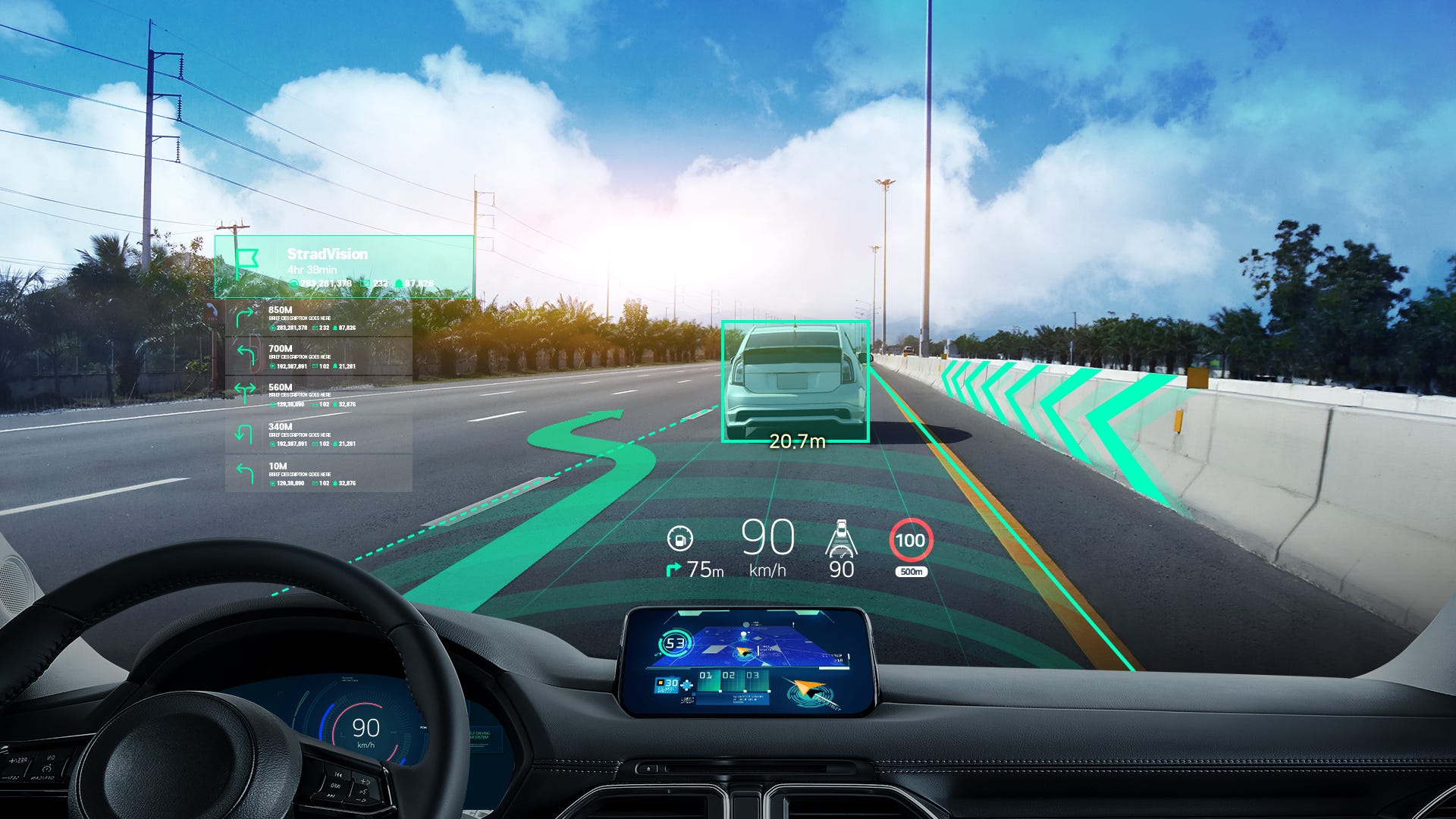
The automotive industry is undergoing a profound digital transformation. Among the most impactful innovations is Augmented Reality (AR) in automotive displays, a technology that overlays digital information onto a driver’s real-world view. Unlike conventional dashboards or infotainment screens, AR-powered systems integrate navigation, safety alerts, and contextual data directly into the windshield or display cluster.
This integration enhances driver awareness, reduces distraction, and improves decision-making in real time. As vehicles become increasingly connected and autonomous, AR displays are emerging as a central component of next-generation driving experiences.
What Is Augmented Reality in Automotive Displays?
Augmented Reality (AR) refers to technology that superimposes digital content—such as images, directions, or warnings—onto a real-world environment. In automotive applications, AR typically appears through:
- Head-Up Displays (HUDs) projected onto the windshield
- Instrument cluster overlays
- Advanced infotainment systems
Instead of glancing down at a screen for navigation, drivers can see directional arrows aligned with the road ahead. Lane departure warnings, pedestrian detection alerts, and hazard indicators appear directly within their field of view.
This seamless integration bridges the gap between physical and digital driving environments.
Core Technologies Behind AR Automotive Displays
Several advanced technologies work together to make AR displays functional and accurate:
1. Sensors and Cameras
Modern vehicles rely on:
- Front-facing cameras
- Radar systems
- LiDAR sensors
- GPS and mapping systems
These components gather environmental data in real time.
2. Real-Time Data Processing
Powerful onboard processors analyze sensor input instantly. The system calculates object positions, road geometry, and vehicle movement to ensure digital overlays align precisely with the physical environment.
3. Projection Systems
AR content is typically projected using:
- Laser-based projection
- Digital light processing (DLP)
- Waveguide technology
These systems ensure high visibility even in bright daylight.
Key Applications of AR in Vehicles
Enhanced Navigation
One of the most widely adopted uses is AR navigation guidance. Instead of traditional map-based directions:
- Arrows appear directly on the road view
- Lane-level guidance becomes more precise
- Complex intersections become easier to navigate
This reduces confusion and missed turns, especially in unfamiliar areas.
Advanced Driver Assistance Systems (ADAS)
AR enhances safety features by visually highlighting:
- Pedestrians and cyclists
- Lane boundaries
- Speed limits
- Potential collision zones
By overlaying warnings within the driver’s line of sight, reaction time improves significantly.
Night Vision Integration
AR can integrate night vision camera feeds and highlight animals or obstacles in low-light conditions. This is especially useful on rural roads or highways.
Parking Assistance
During parking maneuvers, AR can project guiding lines and obstacle markers directly onto the windshield display, offering more intuitive spatial awareness.
Leading Automotive Brands Implementing AR Displays
Several manufacturers have integrated AR technology into production vehicles:
- BMW – Offers advanced AR navigation in select models
- Mercedes-Benz – Features AR-enhanced MBUX infotainment systems
- Audi – Implements AR head-up displays in premium models
- Hyundai – Developing AR HUD solutions in newer electric vehicles
These systems vary in projection distance and display size, with some projecting virtual images that appear several meters ahead of the vehicle.
Benefits of AR Automotive Displays
Improved Safety
- Keeps driver eyes on the road
- Reduces distraction from dashboard screens
- Provides real-time hazard awareness
Better User Experience
- Intuitive guidance
- Clearer navigation in complex traffic scenarios
- Personalized display configurations
Support for Autonomous Driving
As vehicles move toward higher automation levels, AR displays help communicate system status and environmental interpretation to drivers.
Challenges and Limitations
Despite its advantages, AR in automotive displays faces several challenges:
- High development costs
- Calibration precision requirements
- Visibility issues in extreme lighting conditions
- Driver overload if too much information is displayed
Manufacturers must carefully balance information density to avoid cognitive distraction.
Future Outlook of AR in Automotive Displays
The future of AR in vehicles extends beyond navigation and safety. Emerging developments include:
- Integration with vehicle-to-everything (V2X) communication
- 3D spatial mapping with enhanced depth perception
- AI-driven contextual recommendations
- Expanded display surfaces across entire windshields
As electric and autonomous vehicles become mainstream, AR is expected to play a foundational role in the digital cockpit ecosystem.
Frequently Asked Questions (FAQs)
1. How is AR different from a standard head-up display?
Traditional HUDs display basic information such as speed or navigation directions. AR HUDs align digital graphics with real-world objects, creating context-aware overlays rather than static projections.
2. Does AR in cars require internet connectivity?
Not necessarily. Core AR functions rely on onboard sensors and mapping systems. However, cloud connectivity enhances real-time updates and traffic data.
3. Can AR displays function in all weather conditions?
Most systems are designed for varied environments, but heavy rain, fog, or direct sunlight can affect sensor accuracy and display visibility.
4. Are AR automotive displays available in mid-range vehicles?
Currently, AR systems are more common in premium models. However, as technology costs decrease, mid-range adoption is increasing.
5. Is AR technology distracting for drivers?
When properly designed, AR reduces distraction by minimizing the need to look away from the road. Poor implementation, however, may cause information overload.
6. Do AR displays work with polarized sunglasses?
Some AR HUD systems may experience reduced visibility with polarized lenses, though manufacturers are improving compatibility.
7. Will AR displays replace traditional dashboards entirely?
Not in the immediate future. Most manufacturers use AR as a complementary technology alongside conventional instrument clusters and infotainment systems.